Should I Sell My San Martin Home as an Estate, Ranch, or Lifestyle Property?
A San Martin home with land can be hard to describe.
That may sound simple, but it matters.
Because the way a property is described affects who pays attention.
It affects how buyers understand the land.
It affects how they value the improvements.
It affects whether they see the home as a luxury estate, a working ranch, a horse property, a private retreat, or a rural lifestyle home.
And sometimes, the wrong description can make the right buyer miss the property completely.
That is why San Martin sellers should not rush into a generic listing strategy.
A home with acreage needs a clear identity before it goes to market.
Not a label that sounds fancy.
A label that helps the right buyer understand what they are really buying.
DeVonna Meyer is a luxury real estate agent in Morgan Hill, CA, helping South County homeowners, estate owners, trustees, downsizers, and acreage property owners prepare their properties with clarity, care, and a steady plan. I have been based in Morgan Hill since 1988 and licensed since 2006, and San Martin is one of those places where the way a property is positioned can shape the entire sale.
So if you are asking, “Should I sell my San Martin home as an estate, ranch, or lifestyle property?” the real answer starts with what your property truly offers.
Quick Answer
You should sell your San Martin home as an estate, ranch, or lifestyle property based on the property’s strongest buyer appeal. A luxury estate usually leads with privacy, architecture, outdoor living, views, and guest space. A ranch may lead with land, fencing, barns, animals, shops, and utility. A lifestyle property may lead with space, gardens, outdoor living, privacy, and a calmer South County way of life.
The San Martin Property Positioning Check
Before deciding how to position your San Martin home, ask five questions:
What is the strongest feature of the property?
Who is the most likely buyer?
How usable is the land?
Which improvements genuinely add value?
What lifestyle does the property make possible?
That last question is important.
Buyers are not only buying acreage.
They are buying what the acreage allows them to do.
Host family.
Keep horses.
Build gardens.
Work from a shop.
Enjoy privacy.
Live with more breathing room.
Entertain outdoors.
Create a quieter daily routine.
The stronger the positioning, the easier it is for buyers to understand why the property is worth attention.
Table of Contents
- Why positioning matters when selling a San Martin home
- What does it mean to sell as an estate?
- What does it mean to sell as a ranch?
- What does it mean to sell as a lifestyle property?
- Estate vs ranch vs lifestyle property
- How land use shapes the right positioning
- Why buyer type matters
- How improvements affect the story
- When a property fits more than one category
- What sellers should avoid when describing acreage
- The House, Land, and Confidence framework
- Local authority block
- Real example
- What people get wrong
- How to choose the right positioning strategy
- Related San Martin seller resources
- FAQ
- Bottom Line
- Strategizing Your Next Chapter
- About DeVonna Meyer
- Contact DeVonna Meyer
Why Positioning Matters When Selling a San Martin Home
San Martin properties are rarely simple.
One home may have a gated entrance, a pool, guest space, views, and outdoor living.
Another may have barns, fencing, animal areas, trailer access, and a working ranch feel.
Another may have a comfortable home, gardens, a shop, and a quiet setting that appeals to buyers who want space without feeling overwhelmed.
Those are different buyer stories.
And they attract different buyers.
If the property is marketed too generally, buyers may not understand its value.
If it is marketed too narrowly, the seller may miss a wider buyer pool.
If it is marketed inaccurately, buyers may feel disappointed when they arrive.
That is why positioning matters.
It helps answer:
Who is this property for?
What makes it valuable?
What lifestyle does it support?
Why should a buyer choose this over another San Martin or South County property?
A good listing strategy does not just describe the property.
It frames the opportunity clearly.
What Does It Mean to Sell as an Estate?
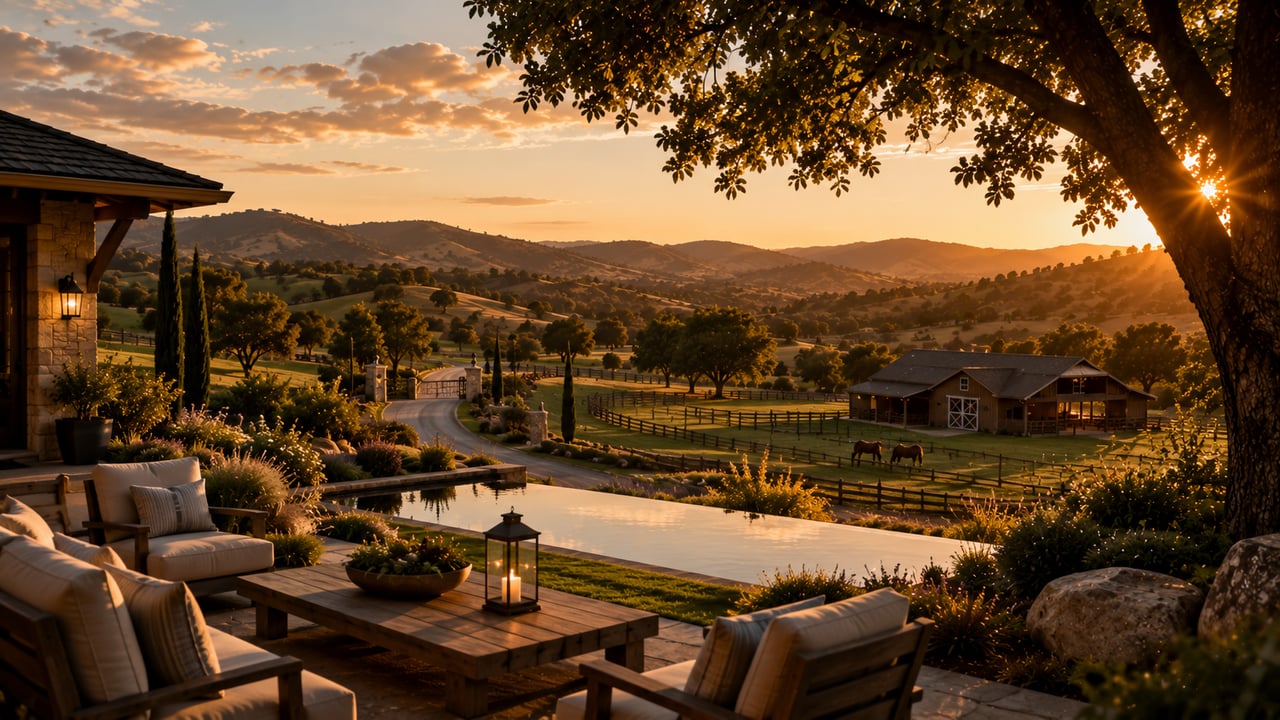
A San Martin home may be best positioned as an estate when the strongest appeal is privacy, scale, quality, setting, and elevated living.
An estate-style property may include:
A larger or custom home.
A gated entrance.
A strong sense of arrival.
Privacy from neighbors.
Views.
A pool or outdoor entertaining area.
Guest space.
High-quality finishes.
Architectural presence.
Mature landscaping.
Room for family gatherings.
A peaceful setting.
Estate positioning is usually about refinement.
The buyer is often looking for a property that feels private, impressive, and comfortable.
They may not be looking for a working ranch.
They may not want major projects.
They may want land, but they want the land to feel beautiful, manageable, and connected to the home.
For estate buyers, the showing experience matters.
They notice the driveway.
They notice the gate.
They notice how the home sits on the land.
They notice whether the outdoor spaces feel intentional.
They notice whether the property feels cared for.
If the property has an estate feel, the marketing should show that clearly.
What Does It Mean to Sell as a Ranch?
A San Martin home may be best positioned as a ranch when the land, utility, animals, barns, fencing, and working features are the main value drivers.
A ranch-style property may include:
Usable acreage.
Pasture.
Barns.
Animal areas.
Fencing and cross-fencing.
Trailer access.
Equipment storage.
A shop.
Irrigation.
Open land.
Agricultural or hobby use.
Functional driveways and access.
Practical improvements.
Ranch positioning is not about pretending the property is polished if it is really practical.
It is about showing utility clearly.
A ranch buyer wants to know how the land works.
They may ask:
Where can animals go?
How is the fencing?
Can a trailer turn around?
Is there water access?
How usable is the pasture?
Where is equipment stored?
Are the barns functional?
Is the property easy to manage?
For this buyer, a clean, honest description is better than fancy language.
The right buyer wants to understand use.
What Does It Mean to Sell as a Lifestyle Property?
A lifestyle property sits between the estate and ranch categories.
It may not be a formal luxury estate.
It may not be a working ranch.
But it offers something buyers want deeply.
Space.
Privacy.
Gardens.
Outdoor living.
A shop.
Room for hobbies.
A slower pace.
A place for family.
A more peaceful South County rhythm.
A lifestyle property may include:
A comfortable home.
Usable land.
Outdoor seating areas.
Gardens or orchard space.
A pool.
Room for animals.
A detached garage or shop.
Views.
Privacy.
Guest parking.
Flexible land use.
A quieter daily setting.
This positioning often works well for San Martin homes that appeal to buyers leaving more crowded areas.
They may not know exactly what to call the property.
They just know they want room to breathe.
They want a home that feels different from a standard neighborhood property.
They want the benefit of land without feeling like they are taking on a full ranch operation.
For these buyers, the story matters.
The marketing should help them imagine daily life.
Morning coffee outside.
Family dinners under the covered patio.
A garden in season.
A quiet office with views.
Grandchildren playing in the yard.
A weekend spent at home because home already feels like the destination.
Estate vs Ranch vs Lifestyle Property
Positioning | Best Fit | Buyers Usually Notice |
|---|---|---|
Estate | Privacy, views, custom home, guest space, outdoor living, strong arrival | Presentation, setting, finishes, privacy, comfort |
Ranch | Usable land, barns, fencing, animals, shops, trailer access | Function, access, water, fencing, land use |
Lifestyle Property | Space, gardens, outdoor living, hobbies, privacy, manageable acreage | Daily comfort, flexibility, outdoor life, ease of use |
The goal is not to force the property into a label.
The goal is to help the right buyer understand the strongest story quickly.
How Land Use Shapes the Right Positioning
Land use is one of the biggest clues.
If the land is flat, fenced, and organized for animals, ranch or horse-property positioning may make sense.
If the land is private, landscaped, and centered around outdoor living, estate or lifestyle positioning may be stronger.
If the land has gardens, a shop, a pool, and flexible outdoor areas, lifestyle positioning may be the best fit.
If the land is large but much of it is not usable, the marketing needs to be careful.
Total acreage alone should not drive the story.
Usable acreage matters more.
Buyers want to understand what the land can actually do.
Can it support horses?
Can it support gardens?
Can it support outdoor entertaining?
Can it provide privacy?
Can it accommodate guests, trailers, storage, or hobbies?
Can it be maintained reasonably?
The right positioning should be based on usable value, not just land size.
Why Buyer Type Matters
Different buyers notice different things.
A luxury buyer may care most about:
Privacy.
Architecture.
Views.
Outdoor living.
Guest space.
A beautiful arrival experience.
A horse buyer may care most about:
Fencing.
Barns.
Water.
Pasture.
Trailer access.
Safe animal areas.
A hobby buyer may care most about:
Shops.
Garages.
Storage.
Power.
Access.
Flexibility.
A family buyer may care most about:
Bedrooms.
Yard space.
Safety.
Parking.
Storage.
Outdoor gathering areas.
A downsizer may care most about:
Privacy.
Ease of maintenance.
Single-level living.
Comfort.
A manageable amount of land.
A seller who understands the likely buyer can position the property more clearly.
Trying to appeal to everyone often makes the marketing weaker.
The goal is not to limit interest.
The goal is to make the strongest buyer recognize the property quickly.
How Improvements Affect the Story
Improvements can help define the property’s identity.
A gated entry and polished outdoor living may support estate positioning.
Barns, fencing, and animal areas may support ranch positioning.
A shop, garden, pool, and outdoor seating may support lifestyle positioning.
But improvements only help when buyers understand them.
A seller should be ready to explain:
What structures exist.
How they are used.
Whether permits apply.
What has been maintained.
What systems serve the property.
How the improvements support daily life.
What makes them useful.
This matters because buyers do not always know how to interpret acreage features.
A clean shop may be obvious to one buyer and confusing to another.
A barn may be exciting to a horse buyer but irrelevant to someone who wants privacy and gardens.
A pool may support lifestyle or estate positioning.
A guest structure may support family, hosting, or multi-generational use.
The same improvement can tell different stories depending on the target buyer.
When a Property Fits More Than One Category
Some San Martin homes fit more than one category.
That is common.
A property can feel like an estate and also have ranch features.
A home can have equestrian improvements and still appeal to lifestyle buyers.
A property can have a shop, gardens, and views without being a ranch or formal estate.
When this happens, the strategy should choose the strongest primary position and support it with secondary features.
For example:
A polished gated home with views, pool, and guest space may be marketed primarily as a private estate, with acreage and flexible land use as supporting benefits.
A functional property with barns, fencing, and animal areas may be marketed primarily as a ranch or horse property, with comfortable living and privacy as supporting benefits.
A home with gardens, outdoor living, a shop, and manageable acreage may be marketed primarily as a lifestyle property, with flexibility and space as supporting benefits.
The mistake is trying to make the property sound like everything at once.
Buyers need clarity.
What Sellers Should Avoid When Describing Acreage
Sellers should avoid vague labels that do not match the property.
Calling every large home an estate does not make it one.
Calling a property a ranch when the land is not set up for ranch use can disappoint buyers.
Calling a property a horse property without practical horse features can create confusion.
Calling land “usable” when it is difficult to access can weaken trust.
The description should be accurate.
It should be attractive, but still honest.
Buyers can feel the difference when they arrive.
If the marketing promises an estate experience, the entry, home, privacy, and setting should support that.
If it promises ranch function, the land and improvements should support that.
If it promises lifestyle, the buyer should be able to imagine that lifestyle during the showing.
Good positioning builds trust before the buyer steps on the property.
The House, Land, and Confidence Framework
For San Martin homes with acreage, I like to come back to a simple framework:
House.
Land.
Confidence.
House
What does the home offer?
Size, layout, condition, updates, light, storage, guest space, and daily comfort.
Land
What does the land make possible?
Privacy, views, animals, gardens, outdoor living, storage, family gatherings, and flexibility.
Confidence
What helps the buyer trust what they are buying?
Well records, septic information, permits, maintenance history, inspections, clean presentation, and clear answers.
This framework helps determine whether the property should be positioned as an estate, ranch, or lifestyle property.
Estate buyers often need strong house, setting, and confidence.
Ranch buyers often need strong land, utility, systems, and confidence.
Lifestyle buyers often need a clear connection between home, land, daily comfort, and manageable responsibility.
Local Authority Block
San Martin is different from a standard neighborhood market.
It sits close to Morgan Hill and Gilroy, but the properties often feel more rural, more private, and more individual.
That individuality is exactly why positioning matters.
A San Martin acreage home may compete with Morgan Hill estates, Gilroy ranch properties, Los Gatos rural homes, or other South County acreage.
The buyer may not search only by city.
They may search by lifestyle.
Acreage.
Horse property.
Privacy.
Estate.
Shop.
Guest space.
Land.
Views.
That means the listing needs to help the right buyer connect the dots.
The property has to be easy to understand.
Not just easy to find.
Real Example
Imagine a San Martin property with a beautiful custom home, gated entrance, pool, guest space, and two acres of usable land.
It has a shop and room for animals, but the strongest first impression is privacy, comfort, and outdoor living.
That property may be best positioned as a private estate or lifestyle property, not simply acreage.
Now imagine another San Martin property with barns, fenced pastures, trailer access, water to animal areas, and a modest but comfortable home.
That property may be best positioned as a ranch or horse property, even if the home is not as polished.
Then imagine a third property with a warm family home, gardens, fruit trees, outdoor seating, a detached shop, and a peaceful setting.
That may be a lifestyle property.
The land supports daily life, but the buyer is not necessarily looking for a ranch operation.
Each property can be valuable.
Each needs a different story.
What People Get Wrong
The first mistake is assuming the highest-sounding label is the best label.
It is not.
The best label is the one that matches the property and attracts the right buyer.
The second mistake is calling everything an estate.
Estate positioning works only when the property has the privacy, presence, condition, and lifestyle to support it.
The third mistake is using ranch language without ranch function.
Buyers who want animals, barns, fencing, and pasture will notice quickly.
The fourth mistake is ignoring lifestyle buyers.
Not every acreage buyer wants a ranch. Some simply want space, privacy, gardens, outdoor living, and a calmer daily pace.
The fifth mistake is listing features without explaining why they matter.
Buyers need to understand how the land and improvements improve daily life.
The sixth mistake is hiding uncertainty.
If there are well, septic, permit, or maintenance questions, the strategy should address them clearly.
The seventh mistake is marketing the property only as a house.
In San Martin, the land is often part of the value story.
How to Choose the Right Positioning Strategy
Choosing the right strategy starts with walking the whole property.
Not just the home.
The driveway.
The entrance.
The land.
The outdoor spaces.
The barns.
The shop.
The fencing.
The views.
The guest areas.
The systems.
The way everything connects.
Then ask:
What is the first thing a buyer will remember?
What type of buyer will value this most?
Is the land truly usable?
Are the improvements functional?
Does the property feel polished, practical, peaceful, or flexible?
What records or inspections would support the story?
What should photography highlight?
What should be explained in the listing copy?
What should be saved for private showings?
The right positioning should feel obvious once the property is understood.
A seller should not have to force the story.
The property already has one.
The job is to tell it clearly.
Related San Martin Seller Resources
If you are preparing to sell a San Martin home with acreage, these related guides can help:
How Do I Market a San Martin Home With Acreage to the Right Buyer?
What Do Buyers Look for in a San Martin Acreage Property?
How Do I Price a San Martin Home With Land?
How Do I Know What My San Martin Home With Acreage Is Worth?
What Documents Should I Gather Before Selling a San Martin Acreage Property?
Why Online Estimates Miss the Value of San Martin Acreage Homes
What Should Sellers Fix Before Listing a San Martin Acreage Home?
Should I Get Inspections Before Selling a San Martin Home With Land?
How Do I Prepare a San Martin Estate for Luxury Buyers?
What Is It Like to Live in San Martin, CA?
What Makes San Martin Real Estate Different From Morgan Hill?
FAQ
Should I sell my San Martin home as an estate, ranch, or lifestyle property?
You should position it based on the property’s strongest buyer appeal. If the home has privacy, views, outdoor living, and a strong sense of arrival, estate or lifestyle positioning may fit. If the land has barns, fencing, animals, utility, and working features, ranch positioning may be stronger.
What makes a San Martin home an estate?
A San Martin estate usually has privacy, scale, architectural presence, outdoor living, views, guest space, and a strong sense of arrival. The property should feel elevated, comfortable, and well-presented.
What makes a San Martin property a ranch?
A ranch property usually has usable land, fencing, barns, animal areas, trailer access, storage, shops, irrigation, or other practical land-use features. The focus is usually function, land, and utility.
What is a lifestyle property?
A lifestyle property offers space, privacy, outdoor living, gardens, views, hobbies, and a calmer daily rhythm. It may not be a formal estate or working ranch, but it supports the way buyers want to live.
Can one property be both an estate and a ranch?
Yes. Some San Martin properties have both estate features and ranch function. In that case, the marketing should choose the strongest primary position and use the other features as supporting value.
Why does positioning matter when selling acreage?
Positioning matters because buyers need to understand what the property offers. The right positioning helps the right buyer recognize the value of the home, land, improvements, and lifestyle.
Should I mention barns, shops, and fencing in the marketing?
Yes, when they are useful, maintained, and relevant to the likely buyer. These features can add value when the marketing explains how they support daily life or land use.
Should every San Martin acreage home be marketed as luxury?
No. Luxury positioning works when the property supports it. Some homes are better marketed as ranch properties, lifestyle properties, horse properties, or private acreage homes.
What is the biggest mistake sellers make with San Martin property positioning?
The biggest mistake is choosing a label that sounds good but does not match the property. Buyers respond best when the marketing is clear, accurate, and aligned with how the property actually lives.
Bottom Line
A San Martin home with land needs more than a listing description.
It needs the right identity.
Estate.
Ranch.
Lifestyle property.
Horse property.
Private acreage.
Country home.
The best choice depends on what the property truly offers and who is most likely to value it.
When the positioning is clear, buyers understand the property faster.
They see the land differently.
They understand the improvements.
They connect with the lifestyle.
And they are more likely to move forward with confidence.
Strategizing Your Next Chapter
If you are thinking about selling a San Martin home with land, the next step may be a calm positioning conversation before you make any major decisions.
We can talk through:
Whether your property is best positioned as an estate, ranch, or lifestyle property
What buyer type is most likely to value it
How your land, outbuildings, fencing, views, and systems affect the story
What should be highlighted in photography and marketing
Which records or inspections would support buyer confidence
How to price and present the property clearly
No pressure.
Just a clear conversation about your property, your timing, and the strategy that fits.
Let me know your thoughts and feel free to share your timing.
About DeVonna Meyer
DeVonna Meyer is a luxury real estate agent in Morgan Hill, CA, helping South County homeowners, estate owners, trustees, downsizers, and acreage property owners make thoughtful real estate decisions with clarity, care, and a steady plan. Based in Morgan Hill since 1988 and licensed since 2006, DeVonna brings local experience, strategic guidance, and a calm approach to Morgan Hill, San Martin, and South County real estate.
Contact DeVonna Meyer
DeVonna Meyer Realtor
eXp Realty
16433 Monterey Rd Suite 120
Morgan Hill, CA 95037
Phone: 408-981-4079
Website: devonnameyer.com