Is New Construction a Good Choice for a First-Time Home Buyer in Morgan Hill?
Buying your first home already comes with a long list of questions.
How much can I afford?
How much do I need for a down payment?
Should I buy a condo, townhome, or single-family home?
How fast do I need to make a decision?
Then new construction adds another layer.
Do I need my own real estate agent when buying from a builder?
Are builder incentives really a good deal?
What costs are not included in the advertised price?
Can I inspect a brand-new home?
What happens if construction is delayed?
Should I choose new construction or buy an existing home instead?
Those are good questions.
For a first-time home buyer in Morgan Hill, new construction can be a strong option, but only when the numbers, location, contract, total costs, and long-term fit all make sense.
A beautiful model home is not enough.
A low advertised interest rate is not enough.
A builder credit is not enough.
The right decision comes from understanding the full purchase.
DeVonna Meyer is a luxury real estate agent in Morgan Hill, CA, helping South County homeowners and buyers make thoughtful real estate decisions with clarity, care, and a steady plan. Based in Morgan Hill since 1988 and licensed since 2006, I help first-time buyers understand whether new construction fits their budget, lifestyle, and long-term goals.
New construction can feel easier because everything looks clean, modern, and finished.
But new does not mean simple.
It means different.
Quick Answer
Yes, new construction can be a good choice for a first-time home buyer in Morgan Hill, especially for someone who values newer systems, modern layouts, fewer immediate repairs, current energy standards, and a more predictable early ownership experience.
But buyers should look beyond the model home and advertised price.
The real decision should include the full monthly payment, HOA dues, taxes and assessments, solar arrangements, upgrade costs, builder contract terms, construction timing, warranty details, and long-term resale fit.
The better question is:
Does this particular new home make sense for my finances, lifestyle, and future?
The First-Time New Construction Buyer Check
Before buying from a builder, ask:
Can I comfortably afford the full monthly payment?
What is included in the base price?
Which upgrades cost extra?
Is there an HOA?
Are there special taxes or assessments?
How is the solar system structured?
Do I understand the builder's purchase contract?
Can I use my own lender?
What happens if construction is delayed?
Can I have the home independently inspected?
What warranty coverage is included?
Would I still choose this home if the builder incentive disappeared?
That last question matters.
A builder incentive should support the decision.
It should not create the decision.
Table of Contents
- Why first-time buyers consider new construction
- What new construction looks like in Morgan Hill
- Crosswinds and New Horizons
- New construction versus resale
- The real cost beyond the advertised price
- Why the builder's sales office is different
- Do first-time buyers need their own agent?
- What to review before signing a builder contract
- What the California public report tells buyers
- HOA dues and community rules
- Solar and modern energy standards
- Financing and first-time buyer assistance
- Morgan Hill BMR opportunities
- Inspections, walkthroughs, and warranties
- Construction delays and changing timelines
- Who new construction is usually best for
- How to decide whether new construction fits you
- Why local context matters in Morgan Hill
- Real example
- What people get wrong
- Related Morgan Hill buyer resources
- FAQ
- Bottom Line
- Strategizing Your Next Chapter
- About DeVonna Meyer
- Contact DeVonna Meyer
Why First-Time Buyers Consider New Construction
There is an obvious appeal.
Nobody has lived there before.
The kitchen is new.
The roof is new.
The plumbing is new.
The electrical systems are new.
For a first-time buyer who is already nervous about repairs, that can feel reassuring.
New construction may also offer:
Modern floor plans.
Energy-efficient systems.
Current building standards.
Solar.
Community amenities.
Smaller-lot homes that may create another path into homeownership.
For some buyers, the biggest appeal is predictability.
An older resale home may come with a roof that has limited life left, an aging furnace, older windows, or deferred maintenance.
That does not make resale a bad choice.
Older homes can offer larger lots, mature trees, established neighborhoods, architectural character, and more flexibility to improve the property over time.
But some first-time buyers would rather begin with newer systems and fewer immediate projects.
The key is to compare the full ownership experience, not just new versus old.
What New Construction Looks Like in Morgan Hill
Morgan Hill is not building only one type of housing.
The city's residential pipeline includes detached homes, attached homes, condominiums, duets, multifamily housing, affordable ownership opportunities, and other housing types.
That matters because a first-time buyer may be comparing:
A new condominium.
A new duet.
A smaller-lot detached home.
An established townhome.
An older single-family home.
A below-market-rate ownership opportunity.
Each choice comes with different trade-offs.
A condominium may offer a lower purchase price but come with HOA dues.
A duet may offer more living space than a condo but include a shared wall.
A planned community may offer amenities and newer infrastructure but also come with community rules.
A resale home may offer more land or mature landscaping but require more maintenance.
The better question is not:
Which one is newest?
It is:
Which one gives me the strongest combination of monthly comfort, lifestyle fit, long-term flexibility, and confidence?
Crosswinds and New Horizons
Morgan Hill's development pipeline gives first-time buyers more housing types to watch, but project status matters.
Crosswinds
The City has described Crosswinds as a 269-home community with a mix of single-family homes, duets, condominiums, and designated below-market-rate units.
That mix matters because a first-time buyer may find that a condominium or duet fits the budget better than a larger detached home.
New Horizons
New Horizons has been planned for 320 residential lots, with housing types ranging from detached single-family homes to attached multifamily units.
The important lesson is simple:
A project being proposed, approved, or under construction does not automatically mean homes are available for sale today.
First-time buyers should separate:
What is planned.
What is being built.
What is actually available to purchase.
That prevents a buyer from building a homeownership plan around a development that is not yet selling.
New Construction Versus Resale
Neither choice is automatically better.
New construction may make sense when you value:
Newer systems.
Modern energy standards.
Fewer immediate repairs.
Current layouts.
Potential finish selections.
Planned community amenities.
Resale may make sense when you value:
Established neighborhoods.
Mature landscaping.
Larger yards.
More character.
A shorter path to closing.
The ability to see exactly what the neighborhood already looks like.
Possibly more negotiating flexibility.
The decision should not be based on the emotional pull of a model home.
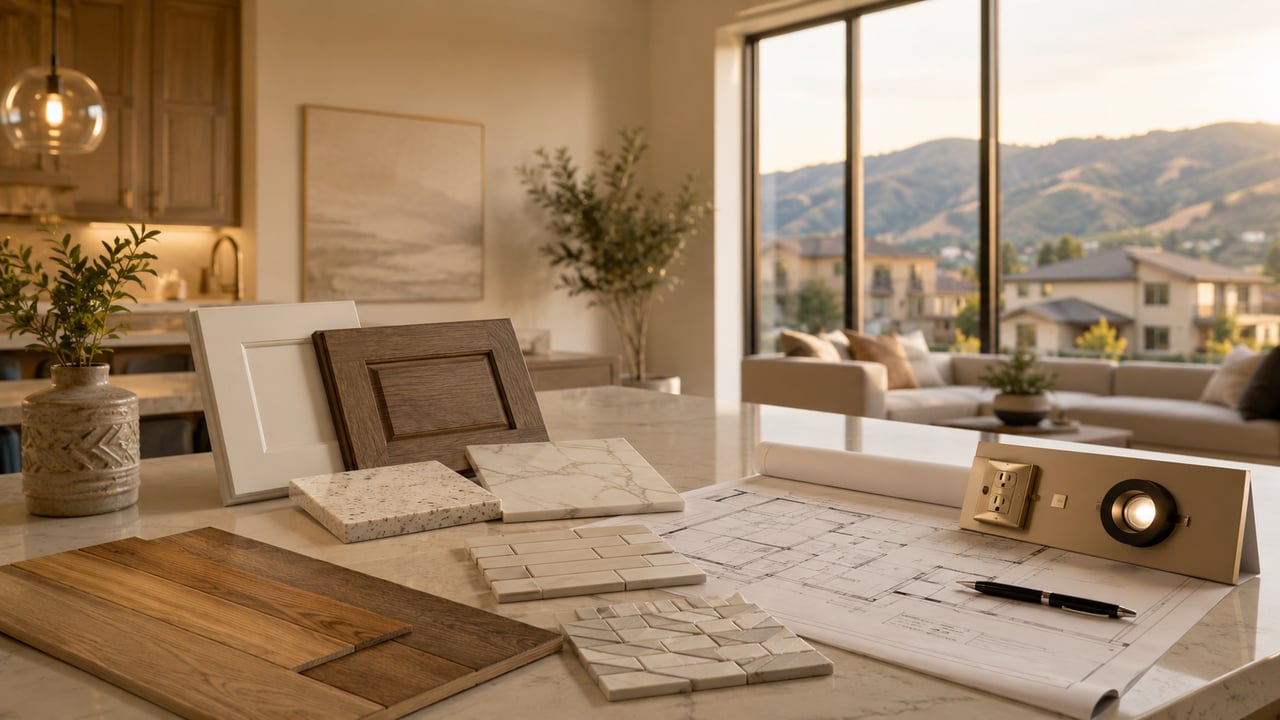
Model homes are designed to create a strong reaction.
Beautiful furniture.
Perfect lighting.
Upgraded flooring.
Designer fixtures.
Finished landscaping.
But the model is not always the base home.
A first-time buyer should ask:
Which features are standard?
Which are upgrades?
How much would this exact model cost?
What will my actual home include?
Will the backyard be finished?
Are window coverings included?
Are appliances included?
These questions bring the decision back to reality.
The Real Cost Beyond the Advertised Price
One of the easiest mistakes a first-time buyer can make is comparing a builder's base price with the price of a resale home.
That comparison may not be complete.
The real cost of new construction may include:
Design upgrades.
Flooring.
Countertops.
Cabinets.
Appliances.
Window coverings.
Backyard landscaping.
HOA dues.
Special taxes or assessments.
Solar-related costs.
Insurance.
Closing costs.
Lender fees.
Post-closing purchases.
The base price may get you the home.
It may not get you the version of the home you pictured after walking through the model.
That does not mean upgrades are bad.
It means they need a budget.
Ask yourself:
Will this upgrade improve my daily life?
Could I do it later for less?
Am I financing this for decades?
Does this push my monthly payment outside my comfort zone?
The goal is not to make the home perfect before moving in.
The goal is to make the purchase work.
Why the Builder's Sales Office Is Different
The builder's sales office can feel relaxed.
You look at floor plans.
You tour a model.
Someone answers questions.
But it is still a real estate transaction.
The sales team is there to sell the builder's homes.
That does not make the sales representative dishonest or unhelpful.
It simply means a first-time buyer should understand who represents whom.
Before visiting a builder's sales office, talk with your own agent about representation and the builder's registration policies.
Some builders have rules about whether an outside agent must register or accompany the buyer on the first visit.
Policies vary.
Do not assume you can visit several times and bring in your agent at the end.
Ask first.
Do First-Time Buyers Need Their Own Agent?
You are not necessarily required to have your own buyer's agent in every new construction purchase.
But there is a practical question:
Who is looking at the transaction entirely from your side?
A buyer's agent may help you:
Compare new construction with resale homes.
Review comparable sales.
Understand lot differences.
Evaluate incentives.
Compare builder financing with outside lenders.
Identify costs outside the base price.
Review HOA questions.
Think about future resale.
Coordinate inspections.
Track deadlines.
This is especially important for a first-time buyer.
New construction adds builder contracts, upgrades, construction timelines, public reports, HOA documents, possible assessments, and warranty terms.
Representation should be discussed before you fall in love with the model.
Not after.
What to Review Before Signing a Builder Contract
Builder contracts may be different from standard resale purchase agreements.
Read them carefully.
Pay attention to:
Deposit amount.
Whether deposits are refundable.
Financing deadlines.
Appraisal terms.
Construction completion estimates.
Delay provisions.
Upgrade deposits.
What happens if you cannot close.
What happens if your loan changes.
Inspection rights.
Walkthrough procedures.
Warranty terms.
HOA obligations.
Solar terms.
A new home can be simple to enjoy.
The paperwork is not necessarily simple.
Take the time to understand it.
What the California Public Report Tells Buyers
For many new subdivisions in California, the Department of Real Estate public report is an important buyer document.
A final public report is generally required before lots or units can be sold and buyers become obligated.
A preliminary public report may allow advertising and reservations, but not binding purchase contracts.
The report may include information about:
CC&Rs.
HOA costs.
Common areas.
Taxes.
Special assessments.
Easements.
Utilities.
Hazard areas.
Purchase contract terms.
Do not treat it like paperwork to click through.
Read it.
Ask questions.
Understand what you will pay, what the HOA controls, and what may still be under construction when you move in.
HOA Dues and Community Rules
Many new communities include an HOA.
An HOA may maintain landscaping, private streets, common areas, pools, parks, gates, or certain exterior elements.
But it is also a financial obligation.
Before buying, ask:
What is the monthly HOA payment?
What does it cover?
Can dues increase?
Is the builder subsidizing HOA costs during early phases?
What happens when that subsidy ends?
Are there rental restrictions?
Parking rules?
Pet rules?
Exterior modification rules?
A low introductory HOA payment should not be viewed in isolation.
Understand the community structure.
Solar and Modern Energy Standards
California's energy standards are another area where new construction differs from many older resale homes.
For newly constructed single-family homes, solar photovoltaic systems are generally required under current California energy standards, subject to specific exceptions.
For buyers, the practical questions matter most.
Ask:
Is the solar system owned?
Financed?
Leased?
Included in the purchase price?
Is there a battery?
Is the home battery-ready?
Who maintains the system?
What warranties apply?
What will transfer when the home is sold later?
Never assume that "solar included" tells you everything.
The monthly payment matters.
The long-term obligation matters.
Future resale matters.
Financing and First-Time Buyer Assistance
A builder's preferred lender may offer:
Closing cost credits.
Rate incentives.
Temporary or permanent rate buydowns.
Other financial incentives.
Those offers can be valuable.
But compare them carefully.
A credit is not automatically the lowest-cost option.
Compare:
Interest rate.
APR.
Points.
Lender fees.
Mortgage insurance.
Closing costs.
Monthly payment.
Cash needed at closing.
What the payment becomes after a temporary buydown ends.
First-time buyers may also qualify for assistance programs depending on income, property type, loan program, and current availability.
For example, CalHFA's MyHome Assistance Program may offer eligible buyers a deferred-payment junior loan of up to 3.5 percent for certain CalHFA FHA loans and up to 3 percent for certain CalHFA conventional loans, based on the lesser of the purchase price or appraised value.
Program rules and funding can change.
The right question is not:
Which lender has the biggest incentive?
It is:
Which financing structure gives me the strongest long-term position?
Morgan Hill BMR Opportunities
Morgan Hill's Below Market Rate ownership program may be worth studying for buyers who qualify.
Some new developments include designated BMR ownership opportunities.
These homes may offer a lower purchase price but usually come with rules involving:
Income limits.
Owner-occupancy requirements.
Resale restrictions.
Equity limitations.
Application requirements.
Financing rules.
Long-term deed restrictions.
BMR ownership is not simply a discounted market-rate home.
It is a different ownership structure designed to preserve affordability.
For the right buyer, it may create a path into homeownership that otherwise feels out of reach.
For another buyer, the restrictions may not fit long-term plans.
Know the difference before applying.
Inspections, Walkthroughs, and Warranties
A brand-new home should still be reviewed carefully.
New does not mean flawless.
Construction involves many trades.
Framing.
Roofing.
Electrical.
Plumbing.
HVAC.
Drywall.
Windows.
Flooring.
Appliances.
Drainage.
Depending on the builder's rules and construction timing, a buyer may consider inspections at appropriate stages.
That could include:
A pre-drywall inspection.
A final inspection before closing.
A follow-up inspection before certain warranty periods expire.
The final walkthrough also matters.
Check:
Doors.
Windows.
Cabinets.
Appliances.
Lights.
Outlets.
Plumbing fixtures.
Flooring.
Paint.
Tile.
Counters.
Garage doors.
Exterior finishes.
Do not feel uncomfortable pointing out incomplete or damaged items.
That is part of the process.
Also read the builder's warranty.
Ask what is covered, for how long, what is excluded, how claims are submitted, and whether coverage transfers to a future buyer.
Get answers in writing.
Construction Delays and Changing Timelines
One of the biggest differences between resale and new construction is timing.
With new construction, your home may still be a homesite, foundation, framing, or finish work.
Delays can happen because of:
Weather.
Labor shortages.
Material delays.
Utility connections.
Inspections.
Permits.
Infrastructure work.
Ask:
Is the completion date guaranteed or estimated?
What happens to my interest rate if construction is delayed?
Can I extend my rate lock?
What does that cost?
What happens to my current lease?
What if my income or credit changes while waiting?
A first-time buyer should avoid making fragile plans around an estimated completion date.
Leave room.
Who New Construction Is Usually Best For
New construction may be a strong fit for a first-time buyer who wants newer systems, modern layouts, fewer immediate repair projects, and a more predictable early ownership experience.
It may also fit buyers who are comfortable with an HOA, smaller lots, builder timelines, community rules, and the possibility of paying extra for upgrades.
Resale may be a better fit for buyers who want larger yards, mature neighborhoods, more established surroundings, faster closing timelines, or greater flexibility to improve the home over time.
The right answer is not based on whether the home is new.
It is based on whether the total cost, lifestyle, location, and long-term fit make sense.
How to Decide Whether New Construction Fits You
New construction may fit you well when:
You value newer systems.
You want fewer immediate repair projects.
You like modern layouts.
You are comfortable with an HOA.
You understand the full monthly payment.
You can handle possible construction delays.
You value energy efficiency.
You can resist overspending on upgrades.
A resale home may fit you better when:
You want mature landscaping.
You want more yard.
You prefer an established neighborhood.
You want to close sooner.
You want more flexibility around improvements.
You prefer fewer community rules.
The right answer is personal.
Look at the home.
Look at the numbers.
Look at the contract.
Look at the community.
Then decide.
Why Local Context Matters in Morgan Hill
Morgan Hill is not a one-size-fits-all market.
A new condominium may compete with an older downtown townhome.
A duet may compete with a small detached resale.
A new single-family home may compete with an established property with a larger yard.
A BMR opportunity may create a completely different financial path.
The same budget can lead to very different lifestyles.
Ask:
What else can I buy for the same monthly payment?
How much yard matters to me?
How important is walkability?
Do I want an HOA?
How long do I plan to stay?
Do I work from home?
Will my household change?
Would a larger older home fit better than a smaller new one?
The goal is not to buy the newest home.
The goal is to buy the home that fits your life.
Real Example
Imagine a first-time buyer comparing two homes.
The first is a new townhouse with modern finishes, new systems, an HOA, and a builder financing incentive.
The second is an older detached resale with a larger yard, mature trees, and no shared wall.
At first, the new townhome feels easier.
Everything is clean.
Nothing looks broken.
The model is beautiful.
But then we compare the full picture.
The townhouse has HOA dues.
The model includes upgrades that may not be part of the base price.
The builder incentive is attractive, but the loan terms still need to be compared.
The resale home needs cosmetic work, but the yard and detached layout may better fit the buyer's long-term plans.
There is no automatic winner.
The right answer depends on the buyer.
A first-time buyer does not need more excitement.
They need clarity.
What People Get Wrong
The first mistake is assuming new construction means no problems.
New homes can still have defects, warranty issues, incomplete work, and delays.
The second mistake is looking only at the base price.
Upgrades, HOA dues, taxes, assessments, solar, landscaping, insurance, and financing can change the real cost.
The third mistake is walking into the builder's sales office before understanding representation.
Talk with your own agent first.
The fourth mistake is treating builder incentives as free money.
Always compare the full loan structure.
The fifth mistake is assuming the model home represents the standard home.
Ask which features are upgrades.
The sixth mistake is skipping an independent inspection because the home is new.
The seventh mistake is choosing a home based on the excitement of being first.
The better question is whether the home still fits your life when the excitement settles.
FAQ
Is new construction a good choice for a first-time home buyer in Morgan Hill?
It can be. New construction may appeal to buyers who value newer systems, modern layouts, current energy standards, and fewer immediate maintenance projects. The decision should still be based on the total monthly cost, contract terms, HOA obligations, location, and long-term fit.
Is new construction more expensive than resale?
Sometimes, but not always. The base price may be only part of the cost. Upgrades, HOA dues, taxes, assessments, solar arrangements, landscaping, insurance, and financing can affect the full cost of ownership.
Do I need my own real estate agent when buying from a builder?
You are not always required to have your own agent, but a buyer's agent can help compare the builder's offering with other homes, review costs, evaluate incentives, study the neighborhood, coordinate inspections, and keep the buyer's interests at the center of the decision.
Should I bring my agent on my first visit to a builder?
It is smart to speak with your agent before the first visit. Builder registration policies vary, and some require an outside agent to register or accompany the buyer at the beginning of the process.
Can I inspect a brand-new home?
Inspection rights depend on the builder contract and policies, but buyers should ask about pre-drywall inspections, final inspections, walkthrough procedures, and warranty follow-up.
What extra costs should first-time buyers watch for?
Watch for design upgrades, HOA dues, special assessments, solar costs, backyard landscaping, window coverings, appliances, insurance, lender fees, and post-closing purchases.
Are BMR homes available to first-time buyers in Morgan Hill?
Qualified households may be eligible for Morgan Hill BMR ownership opportunities. Income limits, owner-occupancy rules, resale restrictions, application requirements, and other program rules may apply.
What is the biggest mistake first-time buyers make with new construction?
The biggest mistake is focusing on the model home and advertised price without studying the full monthly payment, upgrades, HOA, financing, taxes, assessments, solar structure, contract, inspection rights, and long-term fit.
Bottom Line
New construction can be a very good choice for a first-time home buyer in Morgan Hill.
But not because it is new.
Not because the model home is beautiful.
Not because the builder offers an incentive.
It can be a good choice when the full purchase makes sense.
The home.
The numbers.
The contract.
The HOA.
The solar.
The location.
The timeline.
The future.
A first-time buyer should be able to answer one simple question:
Does this home still make sense after I understand everything that comes with it?
When the answer is yes, new construction can offer a comfortable path into homeownership.
When the answer is unclear, slow down.
You do not need to know everything on day one.
You just need enough clarity to make a decision you can live with.
Strategizing Your Next Chapter
If you are thinking about buying your first home in Morgan Hill and comparing new construction with resale, the next step may be a calm conversation about what actually fits your life.
We can talk through:
How new construction compares with resale homes in your budget.
What the full monthly payment really looks like.
Which builder costs may not appear in the base price.
How HOA dues, taxes, assessments, solar, and upgrades affect affordability.
Whether a builder incentive truly helps.
What to know before entering a sales office.
How to compare a new condominium, duet, townhome, or detached home.
Whether a BMR opportunity may fit your situation.
No pressure.
Just a clear conversation about your budget, timing, priorities, and what kind of homeownership feels right.
About DeVonna Meyer
DeVonna Meyer is a luxury real estate agent in Morgan Hill, CA, helping first-time buyers understand whether new construction fits their budget, lifestyle, and long-term goals. Based in Morgan Hill since 1988 and licensed since 2006, DeVonna brings local experience, steady guidance, and a practical approach to helping buyers compare new construction, resale homes, financing, lifestyle, and long-term value.
Contact DeVonna Meyer
DeVonna Meyer Realtor
16433 Monterey Rd Suite 120
Morgan Hill, CA 95037
Phone: 408-981-4079
Website: devonnameyer.com