What Extra Costs Come With a New Construction Home in Morgan Hill?
The model home is beautiful.
The kitchen is polished.
The flooring looks perfect.
The landscaping is finished.
The windows have coverings.
The lighting feels complete.
Then you see the builder's starting price and think:
Maybe this could work.
But for a first-time buyer in Morgan Hill, the advertised base price is only the beginning of the financial conversation.
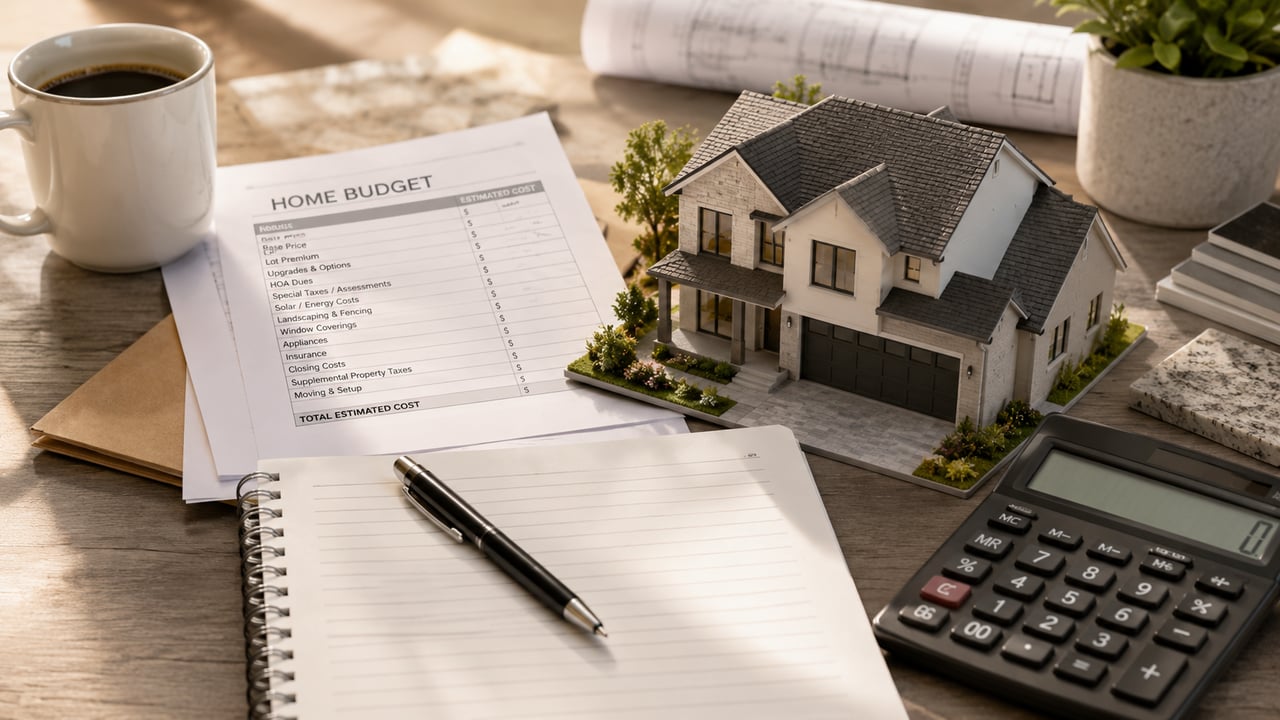
Depending on the home, builder, community, financing, and choices you make, the final cost may also include:
Lot premiums.
Design-center upgrades.
HOA dues.
Special taxes or assessments.
Solar-related costs.
Landscaping.
Window coverings.
Appliances.
Insurance.
Closing costs.
Supplemental property taxes.
Moving and post-closing purchases.
None of this automatically makes new construction a bad choice.
A new home can offer newer systems, current layouts, modern energy standards, and fewer immediate age-related repair concerns.
But the purchase should be based on the full cost.
Not just the number on the builder's sign.
DeVonna Meyer is a luxury real estate agent in Morgan Hill, CA, helping first-time buyers understand new construction costs, builder upgrades, HOA obligations, financing choices, insurance, and long-term trade-offs with clarity, care, and a steady plan. Based in Morgan Hill since 1988 and licensed since 2006, DeVonna helps buyers look beyond the advertised price and understand what a home may truly cost to buy, finish, insure, and comfortably own.
Quick Answer
The extra costs of a new construction home in Morgan Hill may include:
Lot premiums.
Structural and cosmetic upgrades.
HOA dues.
Special taxes, direct levies, or assessments.
Solar or battery-related costs.
Backyard landscaping and fencing.
Window coverings.
Appliances.
Insurance.
Closing costs.
Supplemental property taxes.
Moving expenses and post-closing setup.
Not every property will have every one of these costs.
That is why the most important question is not:
What is the starting price?
It is:
What will this particular home truly cost me to buy, finish, insure, and comfortably own?
The First-Time Buyer Cost Check
Before signing a builder contract, ask:
What is included in the base price?
Which features in the model home are upgrades?
Is there a lot premium for this specific homesite?
How much do I expect to spend on options?
Is there an HOA?
What does the HOA cover?
Are there special taxes, direct levies, or assessments?
How is the solar system structured?
Is the backyard finished?
Are fencing and irrigation included?
Which appliances come with the home?
Are window coverings included?
What will insurance cost for this property?
What are my estimated closing costs?
Could I receive a supplemental property tax bill after closing?
How much cash will I still have after I receive the keys?
That last question matters.
A first-time buyer can qualify for the purchase and still feel financially stretched after moving in.
The goal is not simply to reach closing.
The goal is to own with confidence.
Table of Contents
- Why the base price may not be the real price
- Lot premiums
- Builder upgrades and design-center costs
- HOA dues and community expenses
- Special taxes and assessments
- Solar and energy-related costs
- Landscaping, fencing, and outdoor improvements
- Window coverings and appliances
- Insurance
- Closing costs and supplemental property taxes
- Builder incentives
- The Morgan Hill ownership picture
- Real Example
- What People Get Wrong
- How to Build a Full Ownership Budget
- Related Morgan Hill Buyer Resources
- FAQ
- Bottom Line
- Strategizing Your Next Chapter
- About DeVonna Meyer
- Contact DeVonna Meyer
Why the Base Price May Not Be the Real Price
A builder may advertise a home at a starting price.
That number can be useful.
But it may represent the house with standard finishes, on a particular homesite, before optional upgrades and other ownership costs are added.
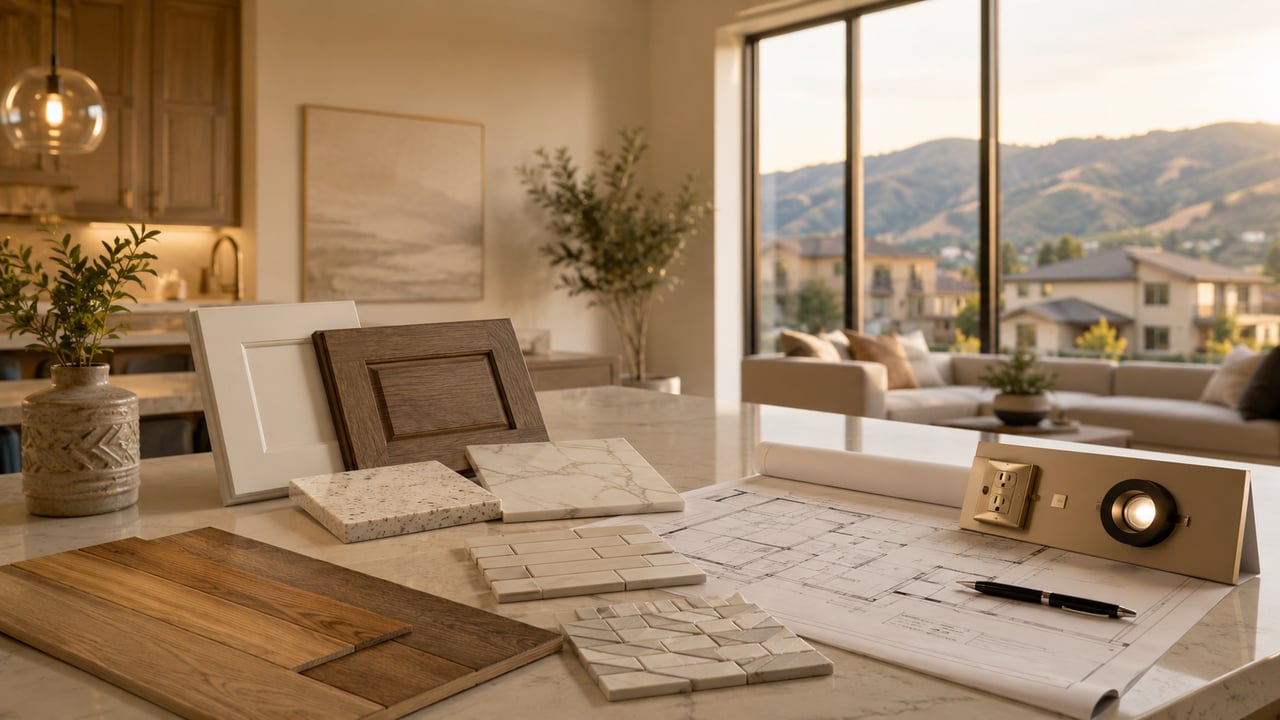
The model home may include upgraded:
Flooring.
Cabinets.
Countertops.
Lighting.
Tile.
Appliances.
Electrical options.
Technology.
Structural features.
Outdoor improvements.
The model is designed to show what is possible.
That does not mean everything you see is included.
Before becoming emotionally attached to a floor plan, ask for written information showing:
What is standard.
What is optional.
What costs extra.
What has already been selected for a quick move-in home.
What the model includes that the base home does not.
That conversation can prevent a major surprise later.
Lot Premiums
Not every homesite is necessarily priced the same.
A builder may charge more for a particular lot because of features such as:
Additional yard space.
A corner location.
A cul-de-sac setting.
A view.
More privacy.
No rear neighbor.
A preferred orientation.
The amount, if any, is builder-specific.
Before paying a premium, ask what you are receiving in return.
A larger yard may matter every day.
More privacy may improve how the home lives.
A better view may have long-term appeal.
But you should also study:
Road exposure.
Sun orientation.
Future phases.
Nearby common areas.
Guest parking.
Utility equipment.
Neighboring lots.
The real question is not simply whether a lot carries a premium.
It is whether that particular location is worth the additional cost to you.
Builder Upgrades and Design-Center Costs
The design center can be one of the most enjoyable parts of buying a new home.
It can also be one of the easiest places to lose track of the budget.
There is always another choice.
Better flooring.
Different cabinetry.
More lighting.
Premium countertops.
Additional outlets.
Upgraded tile.
A different shower.
A larger appliance package.
The issue is not that upgrades are bad.
Some may be practical.
Some may improve everyday comfort.
Some structural options may be difficult or expensive to add later.
A useful way to think about upgrades is to separate them into three groups.
Structural or Hard-to-Change Choices
These may include certain room configurations, electrical locations, plumbing rough-ins, additional windows, or other features that could be disruptive to add later.
Everyday Comfort Choices
These may include flooring, kitchen storage, lighting, or features you expect to use regularly.
Cosmetic Choices
These may look beautiful but could potentially be changed later without major construction.
Before choosing an upgrade, ask:
Will I use this every day?
Would it be difficult to add later?
Am I increasing the purchase price to finance it?
Would I still choose it if I had to pay cash today?
Could I complete it after closing for less?
A beautiful upgrade should not quietly put your payment or reserves under unnecessary pressure.
HOA Dues and Community Expenses
Some new construction communities have homeowners associations.
Some do not.
For properties with an HOA, monthly dues may help pay for common areas, landscaping, pools, clubhouses, private streets, community management, reserves, exterior responsibilities, or other shared expenses.
The exact responsibilities vary by community.
Do not look only at the monthly dues.
Ask:
What does the HOA cover?
What does it not cover?
Can dues change?
What insurance does the HOA carry?
What must I insure separately?
Who maintains roofs or exterior components in an attached community?
What rules affect parking, pets, rentals, landscaping, or exterior modifications?
For qualifying new subdivisions, California's Department of Real Estate says the public report is an important buyer disclosure and must be provided before the buyer becomes obligated to purchase the lot or unit.
Read it.
The HOA is not simply another monthly bill.
It can affect your budget, lifestyle, responsibilities, and future resale.
Special Taxes and Assessments
This is one area where first-time buyers should be particularly careful.
A property's tax bill may include more than the basic ad valorem property tax.
It may also contain:
Special taxes.
Direct levies.
Benefit assessments.
Mello-Roos charges.
Other voter-approved debt or district charges.
Mello-Roos Community Facilities Districts can finance certain public improvements through special taxes paid by benefiting property owners. But not every new construction home has Mello-Roos, and buyers should never assume that every Morgan Hill development is treated the same.
Ask for the complete tax information for the actual property.
Do not rely on a general estimate from another home, another phase, or another community.
The right questions are:
Is this property in a Community Facilities District?
Are there special taxes or direct levies?
What is the current annual amount?
Can it change?
How is it calculated?
How long is the obligation expected to continue?
The actual property matters more than a general rule.
Solar and Energy-Related Costs
California's 2025 Energy Code applies to buildings whose permit applications are submitted on or after January 1, 2026. The updated standards expand heat-pump use in newly constructed residential buildings, encourage electric-readiness, strengthen ventilation standards, and update other energy requirements.
For many newly constructed homes, California's Energy Code includes solar photovoltaic requirements, subject to applicable exceptions and the home's permitting circumstances.
For buyers, the practical questions are more important than the code language.
Ask:
Is the solar system included in the purchase price?
Is it owned?
Financed?
Leased?
Is there a separate monthly payment?
Is a battery included?
Is the home only battery-ready?
What warranties apply?
Who maintains the equipment?
What transfers to a future buyer?
Do not assume solar is simply "free because the home is new."
Understand the actual arrangement attached to the home you are buying.
Landscaping, Fencing, and Outdoor Improvements
The model home may have:
A finished patio.
Grass or other groundcover.
Trees.
Planters.
Outdoor lighting.
Decorative walls.
A built-in barbecue.
Finished side yards.
The home you buy may not include all of that.
Some builders may deliver a finished front yard but an unfinished backyard.
Others may include more.
The only safe answer is to check the specific contract and feature list.
Ask:
What landscaping is included?
Is the backyard finished?
Is irrigation installed?
Is fencing included?
Is drainage complete?
Are there deadlines for finishing the yard?
Do HOA architectural rules apply?
Are patios, walkways, or additional concrete included?
Outdoor improvements can become one of the largest post-closing projects for a buyer who wants the home to feel like the model.
Do not guess.
Price the work before closing when possible.
Window Coverings and Appliances
These smaller expenses can add up quickly.
Depending on the builder and home, the purchase may or may not include:
Blinds.
Shades.
Curtains.
Refrigerator.
Washer.
Dryer.
Ceiling fans.
Decorative light fixtures.
Garage storage.
Security equipment.
Water-treatment equipment.
Do not assume these items are included.
And do not assume they are excluded.
Ask for the actual included-features list.
Before closing, make two lists:
Included with the home.
Still needed after closing.
That simple step can make your post-closing budget much more realistic.
Insurance
Never assume a new home will automatically be inexpensive to insure.
Insurance availability and cost can depend on the location, wildfire exposure, construction characteristics, replacement cost, insurer underwriting, and other factors.
Get a quote for the actual property.
Not just the ZIP code.
Ask:
Can I insure this home through the regular market?
What is the estimated annual premium?
What deductible applies?
What does the HOA insure, if applicable?
What do I need to insure myself?
Would the California FAIR Plan need to be considered?
The California Department of Insurance explains that the FAIR Plan is available to property owners who cannot obtain coverage through a regular insurance company. FAIR Plan coverage is more limited than a traditional homeowners policy, and a Difference in Conditions policy may be used to fill some of those coverage gaps.
Insurance is part of affordability.
Treat it that way before you commit.
Closing Costs and Supplemental Property Taxes
The down payment is not the only cash a buyer may need at closing.
According to the Consumer Financial Protection Bureau, closing costs commonly range from about 2 to 5 percent of the purchase price, excluding the down payment, although the actual amount varies based on the loan, home, lender, location, and other factors.
Closing costs may include:
Lender charges.
Appraisal fees.
Escrow-related expenses.
Title-related costs.
Prepaid insurance.
Property-tax amounts.
Other settlement charges.
The exact numbers belong on the Loan Estimate and final Closing Disclosure.
There is also another tax issue first-time buyers should understand.
In Santa Clara County, a change in ownership or completed new construction can trigger a supplemental assessment. The resulting supplemental tax bill is in addition to the normal annual property tax bill and is based on the difference between the prior value and the new reappraisal, prorated for the applicable period. The County notes that supplemental tax bills are usually not prorated in escrow during the purchase and are generally not paid through the lender's impound account.
That can surprise a first-time buyer who assumes the regular escrow payment covers everything.
Ask about supplemental taxes before closing and leave room in the budget.
Builder Incentives Can Help, but Compare the Full Numbers
A builder may offer:
Closing-cost credits.
Interest-rate buydowns.
Design credits.
Upgrade allowances.
Lot-premium reductions.
Other promotions.
Those incentives can be valuable.
But the biggest headline is not automatically the best financial result.
Compare:
Interest rate.
APR.
Points.
Lender fees.
Monthly payment.
Cash required at closing.
Whether a buydown is temporary or permanent.
What happens when a temporary buydown ends.
The Consumer Financial Protection Bureau recommends comparing the actual Loan Estimate and total cash-to-close figures rather than focusing on only one credit or fee.
A builder incentive should support the decision.
It should not create the decision.
What This Means in Morgan Hill
Morgan Hill's development pipeline includes a mix of housing types.
For example, the City's approved Crosswinds project includes 269 planned homes: 56 single-family residences, 64 duets, and 149 condominiums, with 40 designated as Below Market Rate units. The City's project documents also describe planned recreational areas such as a clubhouse, pool, children's play area, pedestrian paths, and landscaping.
That does not mean every buyer in Crosswinds, or any other Morgan Hill project, will have the same HOA costs, special taxes, upgrades, or post-closing expenses.
Those details must be verified for the specific property and phase.
That is the larger lesson.
A first-time buyer may be comparing:
A new condominium.
A duet.
A detached home.
A BMR opportunity.
A resale townhome.
An older single-family home.
The advertised price is only one part of that comparison.
The stronger question is:
What will each option cost me every month, every year, and during the first five years of ownership?
Real Example
Consider a hypothetical first-time buyer who sees a new home advertised at a price that appears to fit the budget.
The buyer visits the model and loves it.
Then the complete picture begins to take shape.
The preferred homesite has a premium.
Some model-home finishes are upgrades.
The backyard is unfinished.
Window coverings need to be purchased.
The refrigerator, washer, and dryer are not included.
There is an HOA.
The buyer needs to review the full property tax picture.
Insurance still needs to be quoted.
Closing costs require cash.
A supplemental property tax bill may arrive after closing.
The builder is offering a financing incentive.
The home may still be an excellent choice.
But the decision should be based on the complete financial picture.
Not the starting price.
A first-time buyer does not need more excitement.
They need clarity.
What People Get Wrong
The first mistake is assuming the model home represents the base price.
It may not.
The second mistake is focusing only on principal and interest.
HOA dues, taxes, insurance, solar arrangements, and other recurring costs matter too.
The third mistake is assuming every new home has Mello-Roos.
That is not accurate. Check the actual property.
The fourth mistake is assuming landscaping, fencing, appliances, and window coverings are always included or always excluded.
Builder specifications vary.
The fifth mistake is forgetting about supplemental property taxes.
In Santa Clara County, they can be separate from the regular annual property tax bill.
The sixth mistake is letting an incentive make the purchase feel more affordable without comparing the complete loan.
The seventh mistake is spending so much on the purchase that almost no cash remains after closing.
The keys are not the end of the expenses.
They are the beginning of ownership.
How to Build a Full Ownership Budget
Before choosing a new construction home, separate the numbers into four categories.
1. Purchase Price
Base price.
Lot premium.
Structural options.
Design upgrades.
Solar costs included in the transaction.
2. Cash Needed to Close
Down payment.
Closing costs.
Prepaid expenses.
Deposits.
Any buyer-paid fees.
3. Ongoing Ownership Costs
Mortgage payment.
Property taxes.
Special taxes or assessments.
HOA dues.
Insurance.
Solar payments, when applicable.
Utilities.
4. Post-Closing Setup
Landscaping.
Window coverings.
Appliances.
Moving.
Furniture.
Storage.
Security.
Other practical purchases.
Then ask one more question:
How much cash will I still have after all of this?
That answer may be more important than choosing another upgrade.
FAQ
What extra costs come with a new construction home in Morgan Hill?
Possible additional costs include lot premiums, design upgrades, HOA dues, special taxes or assessments, solar-related costs, landscaping, fencing, window coverings, appliances, insurance, closing costs, supplemental property taxes, moving expenses, and other post-closing purchases.
Is the builder's advertised base price the final price?
Not necessarily. The final purchase price may change based on homesite selection, structural options, design upgrades, solar arrangements, and other builder-specific choices.
Do all new homes in Morgan Hill have HOA dues?
No. Some do and some do not. Buyers should review the actual community documents and property-specific information.
Do all new homes in Morgan Hill have Mello-Roos?
No. Some properties may be subject to Mello-Roos or other special taxes and direct levies, while others may not be. Verify the actual tax obligations for the specific property.
Is solar included with a new construction home?
The answer depends on the home, permit timing, Energy Code requirements, applicable exceptions, and builder arrangement. Ask whether the system is owned, financed, leased, included in the purchase price, or subject to a separate payment.
Does a new construction home include landscaping and window coverings?
It depends on the builder and property. Buyers should ask for a written list of included features and identify what must still be completed or purchased after closing.
What are supplemental property taxes?
A change in ownership or completed new construction can result in a supplemental assessment. In Santa Clara County, a supplemental tax bill may be issued separately from the regular annual property tax bill.
What is the biggest mistake first-time buyers make with new construction costs?
One of the biggest mistakes is comparing a builder's starting price with another home's full purchase price without calculating upgrades, recurring ownership costs, closing expenses, supplemental taxes, and post-closing setup.
Bottom Line
A new construction home in Morgan Hill can be a very good choice for a first-time buyer.
But the base price is only the beginning of the conversation.
Look at:
The home.
The lot.
The upgrades.
The HOA.
The taxes.
The assessments.
The solar arrangement.
The landscaping.
The appliances.
The window coverings.
The insurance.
The closing costs.
The supplemental property tax possibility.
The money you will still need after receiving the keys.
The goal is not to avoid every extra cost.
The goal is to understand the costs before you commit.
Ask one simple question:
What will this home truly cost me to buy, finish, insure, and comfortably own?
That answer matters more than the number on the builder's sign.
Strategizing Your Next Chapter
If you are thinking about buying a new construction home in Morgan Hill, the next step may be a calm conversation about the complete financial picture.
We can talk through:
The difference between base price and final price.
Which upgrades may be worth considering.
How lot premiums can affect value and lifestyle.
What HOA dues may cover.
How to check for special taxes or assessments.
Questions to ask about solar.
Landscaping and post-closing costs.
Builder incentives and preferred-lender offers.
Supplemental property taxes.
How much cash you may want to keep after closing.
How a new construction home compares with resale options in your budget.
No pressure.
Just a clear conversation about your budget, timing, priorities, and what kind of ownership experience feels right.
About DeVonna Meyer
DeVonna Meyer is a luxury real estate agent in Morgan Hill, CA, helping first-time buyers understand new construction costs, builder upgrades, HOA obligations, taxes, solar, insurance, financing choices, and long-term trade-offs with clarity, care, and a steady plan. Based in Morgan Hill since 1988 and licensed since 2006, DeVonna helps buyers look beyond the advertised price and understand the complete purchase before making one of life's biggest financial decisions.
Contact DeVonna Meyer
DeVonna Meyer Realtor
16433 Monterey Rd Suite 120
Morgan Hill, CA 95037
Phone: 408-981-4079
Website: devonnameyer.com