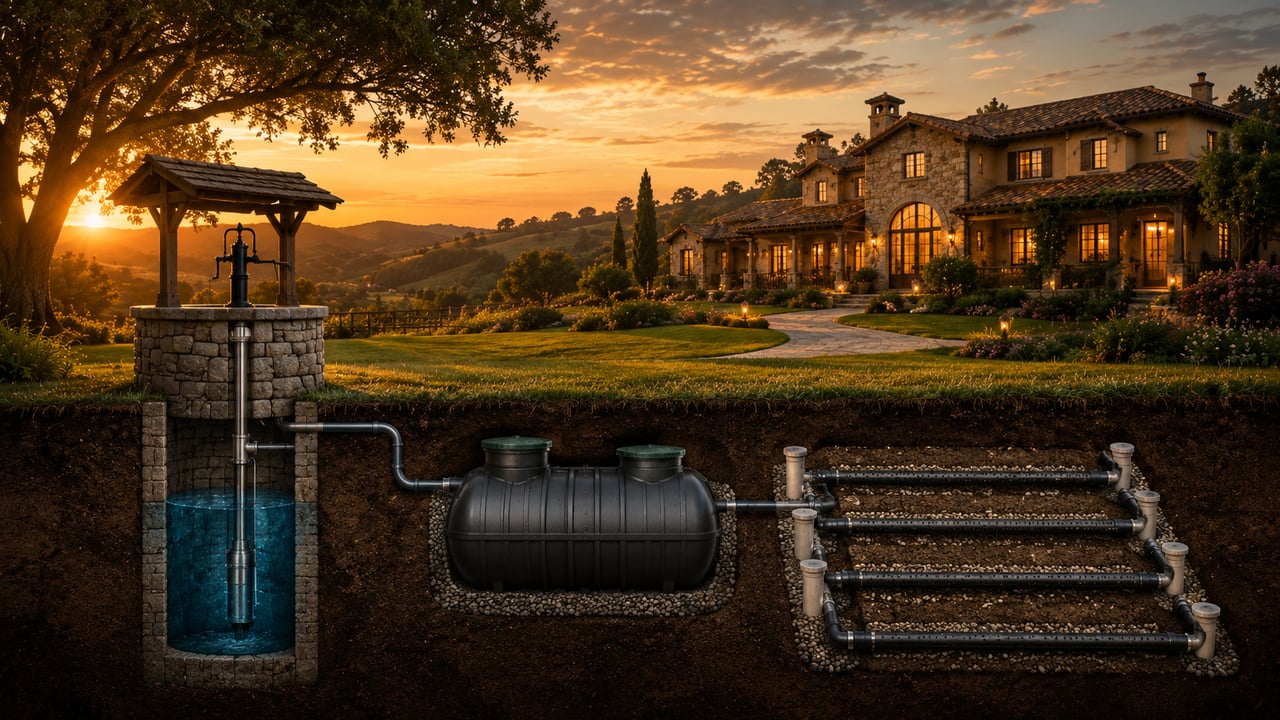
Should I Buy a Morgan Hill Estate With a Well or Septic System?
Buying a Morgan Hill estate with a well or septic system can be a smart decision if you understand what you are buying.
Many beautiful estate properties in Morgan Hill, San Martin, and the surrounding South County areas may have private water, septic systems, or both.
That does not automatically make the property risky.
It does mean the property needs a more careful review.
A well or septic system is not just a detail.
It is part of how the estate functions.
Before buying, you should understand the system type, condition, capacity, maintenance history, inspection results, repair needs, and long-term ownership responsibilities.
DeVonna Meyer is a luxury real estate agent in Morgan Hill, CA, helping estate buyers and sellers make thoughtful real estate decisions with clarity, care, and a steady plan. I have been based in Morgan Hill since 1988 and licensed since 2006, so I understand that estate properties often come with features that require more due diligence than a standard neighborhood home.
The right property can still be a wonderful fit.
The key is knowing what to ask before you move forward.
Quick Answer
You can buy a Morgan Hill estate with a well or septic system if the systems are properly inspected, understood, maintained, and appropriate for the way you plan to use the property. Buyers should review well production, water quality, septic condition, system location, maintenance records, permits where available, inspection reports, repair needs, and long-term service responsibilities before removing contingencies.
A well or septic system does not need to scare you.
It needs to be understood.
The 5 Things to Review First
Before buying a Morgan Hill estate with a well or septic system, start with these five areas:
Well production and water quality
Septic condition and capacity
System location and access
Maintenance history and records
Repair or replacement risk
These details help you understand whether the property works for your life.
They also help you avoid being surprised later.
The Well and Septic Buyer Check
Before helping buyers evaluate a Morgan Hill estate with private systems, I like to look at five areas:
Water: Does the well provide enough water for the home, landscaping, and intended use?
Quality: Has the water been tested, and are any treatment systems needed?
Septic: Is the septic system functioning properly and sized appropriately?
Records: Are permits, service history, inspections, and system locations available?
Lifestyle: Do the systems support how you want to live on the property?
This gives the decision a structure.
It helps buyers move beyond fear and focus on facts.
Table of Contents
- Why wells and septic systems are common on estate properties
- What it means to buy a home with a well
- What it means to buy a home with septic
- Why inspections matter
- Well production should match property use
- Water quality should be tested
- Septic location and capacity matter
- Landscaping, pools, and acreage can affect the decision
- Maintenance responsibilities should be understood
- When a well or septic system may be a concern
- When to bring in specialists
- How I help buyers evaluate private systems
- Real Morgan Hill estate scenario
- What buyers get wrong
- Related Morgan Hill buyer resources
- FAQ
- Bottom Line
- Strategizing Your Next Chapter
- About DeVonna Meyer
- Contact DeVonna Meyer
Why Wells and Septic Systems Are Common on Estate Properties
Many estate properties sit outside dense neighborhood settings.
That is part of their appeal.
They may offer more land, more privacy, longer driveways, larger parcels, guest space, outbuildings, gardens, or a quieter setting.
In areas around Morgan Hill, San Martin, the foothills, Uvas Road, Watsonville Road, Paradise Valley, and more rural South County properties, it is not unusual for homes to have private systems.
That may include:
A private well
A shared well
A septic system
Water storage tanks
Water filtration
Water softening
Pressure tanks
Pumps
Irrigation systems
Leach fields
Septic tanks
Alternative septic components, depending on the property
These systems are not automatically negative.
Many homeowners live very comfortably with wells and septic systems for years.
But they do require a different mindset.
With a standard neighborhood home, buyers often think mainly about municipal utilities.
With a private system, buyers need to understand how water enters the home and how wastewater is handled.
That is part of responsible estate ownership.
What It Means to Buy a Home With a Well
A well is a private water source.
Instead of relying only on a public water connection, the property may draw water from the ground through a well system.
That water may serve the home, landscaping, pool needs, gardens, animals, or other uses depending on the property and system.
When buying a home with a well, you want to understand:
How much water the well produces
How the water quality tests
Whether the well serves only the property or is shared
What equipment supports the well
Whether there are storage tanks
Whether there is a filtration or treatment system
How old the components are
Whether there are service records
Whether the well has had past issues
Whether the water supply supports your intended use
For a Morgan Hill estate, this can matter greatly.
A buyer who wants simple household use may evaluate the well differently than a buyer who wants extensive gardens, animals, an orchard, a vineyard, or heavy irrigation.
The well should be reviewed in the context of the property and the buyer’s lifestyle.
What It Means to Buy a Home With Septic
A septic system handles wastewater on the property.
Instead of sending wastewater to a public sewer system, the home uses a private system that usually includes a septic tank and a drain field or leach field.
When buying a home with septic, you want to understand:
Where the septic tank is located
Where the leach field is located
What type of system it is
How old the system is
Whether it has been inspected
Whether it has been pumped regularly
Whether there are service records
Whether the system is appropriately sized
Whether there have been past repairs
Whether additions or guest spaces affect the system
Whether landscaping, hardscape, or driveways interfere with system areas
A septic system can work well for many years when it is properly designed, used, and maintained.
But buyers should not ignore it.
A septic system is a major property system.
It should be inspected and understood before closing.
Why Inspections Matter
Inspections are essential when buying a Morgan Hill estate with a well or septic system.
A general home inspection is not enough.
You may need specialty professionals to inspect, test, and explain the systems.
Depending on the property, buyers may consider:
Well inspection
Well production test
Water quality test
Pump and pressure system review
Water storage tank review
Filtration or treatment system review
Septic inspection
Septic tank pumping or review
Leach field evaluation
Permit or record review
Plumbing review
Irrigation review
The goal is not to create fear.
The goal is to create clarity.
A buyer should know whether the systems are functioning, whether there are concerns, what maintenance is needed, and whether future costs may be likely.
This information can also affect negotiations.
If the system is healthy and well documented, that may support buyer confidence.
If there are concerns, the buyer may need repairs, credits, further review, or a different decision.
Well Production Should Match Property Use
Well production matters because water needs vary.
A household with two people may use the property differently than a large family, frequent guests, gardeners, animal owners, or someone planning extensive outdoor living.
A Morgan Hill estate may have:
A large home
Guest house
Pool
Gardens
Orchard
Vineyard
Pasture
Irrigation needs
Outdoor kitchen
Large landscaping areas
Future plans for improvements
These uses can affect how much water the property needs.
A well should be evaluated based on current use and intended future use.
Ask:
Is the well production adequate?
How was production tested?
Does production vary seasonally?
Are there water storage tanks?
Is there a shared well agreement?
What happens during dry periods?
How is irrigation supplied?
Are there restrictions or practical limits?
Has the seller had water supply concerns?
A well may be perfectly fine for one buyer and not ideal for another.
That is why lifestyle matters.
You are not just buying the system as it exists.
You are buying whether it supports the way you plan to live.
Water Quality Should Be Tested
Water quality is just as important as water quantity.
A well may produce water, but buyers should understand what is in that water and whether treatment is needed.
Water quality testing may review items such as minerals, bacteria, nitrates, hardness, and other concerns depending on the property and testing scope.
Some properties may have:
Water softeners
Filtration systems
Reverse osmosis systems
UV treatment
Storage tanks
Pressure tanks
Sediment filters
The presence of treatment equipment is not automatically negative.
It may simply mean the property has a system designed to improve water quality or comfort.
But buyers should understand:
What equipment exists
What it treats
How often it needs service
What it costs to maintain
Whether it is owned or leased
Whether it is functioning properly
Whether recent water test results are available
Clean, understandable water information can make a buyer feel much more comfortable.
Unclear water information can create hesitation.
Septic Location and Capacity Matter
Septic systems need physical space.
That is why location matters.
Buyers should understand where the septic tank, distribution components, and leach field are located.
This can affect:
Landscaping
Driveways
Future hardscape
Pools
Guest houses
Additions
Outbuildings
Gardens
Parking
Heavy equipment access
Future repairs
Some buyers fall in love with acreage and then later realize that parts of the land have limitations because of septic areas, easements, slope, drainage, or other system needs.
That does not make the property a bad fit.
It means the buyer needs to understand how the land functions.
Septic capacity also matters.
If the estate has a large home, guest space, or additions, the buyer should understand whether the septic system supports the property as used.
Questions to ask include:
What size is the system?
How many bedrooms is it designed to support?
Where is the leach field?
Has the system been expanded?
Are there repair areas?
Are records available?
Has the system been inspected recently?
Have there been backups, odors, or slow drains?
Has the tank been pumped?
A septic system should not be guessed about.
It should be reviewed.
Landscaping, Pools, and Acreage Can Affect the Decision
Estate buyers often focus on the home first.
But with wells and septic, the land matters too.
Landscaping, pools, gardens, irrigation, and acreage can affect how private systems are used and maintained.
For example:
Large landscaping areas may require more water.
A pool may add water demand.
A garden or orchard may need irrigation.
Animals may require water access.
A vineyard may change water planning.
Heavy vehicles should not drive over septic areas.
Trees may affect septic components.
Future outdoor improvements may be limited by system locations.
Drainage may affect both well and septic planning.
This is why private systems should be reviewed with the full property in mind.
A San Martin acreage estate may have different needs than a West Side Morgan Hill estate with a smaller but landscaped lot.
A foothill property near the Santa Teresa foothills may raise questions about slope, drainage, and access.
A property near Uvas Road or Watsonville Road may have more land-related considerations.
The system review should fit the estate.
Maintenance Responsibilities Should Be Understood
Owning a property with a well or septic system means the owner is responsible for maintenance.
That does not have to be difficult, but it should be planned.
Well-related maintenance may include:
Pump service
Pressure tank review
Water testing
Filtration service
Softener service
Storage tank maintenance
Electrical components
Wellhead protection
Vendor relationships
Septic-related maintenance may include:
Regular pumping
Inspection
Avoiding improper disposal
Protecting leach field areas
Watching for slow drains or odors
Managing landscaping near septic areas
Keeping records
Knowing where system components are located
Good maintenance records can help buyers understand the property.
They can also help future resale.
When buyers know how the systems have been cared for, they often feel more confident.
When records are missing, the buyer may need more inspection and explanation.
When a Well or Septic System May Be a Concern
A well or septic system may require more caution when the information is unclear or the inspection results raise questions.
Potential concerns may include:
Low well production
Poor water quality
No recent water testing
Unknown well location
A shared well with unclear agreement
Old or failing pump equipment
No service records
Septic system not recently inspected
Unknown septic location
Evidence of backups or odors
Poor drainage near septic areas
Leach field concerns
Unpermitted additions affecting system capacity
Tree roots or hardscape near system areas
High estimated repair or replacement cost
These concerns do not always mean the buyer should walk away.
They mean the buyer should slow down, ask more questions, and get professional guidance.
Sometimes the issue can be addressed.
Sometimes it can be negotiated.
Sometimes it becomes too much for the buyer’s comfort level.
A good decision is based on clear information.
When to Bring in Specialists
A well or septic system should be reviewed by the right professionals before you make a final decision.
Depending on the property, that may include:
A well inspector
A septic inspector
A water testing company
A pump or pressure system specialist
A septic contractor
A county or permit-record professional, when needed
A real estate advisor can help you understand what questions to ask and how the findings may affect the purchase strategy.
But the condition, capacity, water quality, and repair needs should be reviewed by qualified specialists.
This helps you make a calm decision based on facts, not assumptions.
How I Help Buyers Evaluate Private Systems
When I help buyers evaluate a Morgan Hill estate with a well or septic system, I encourage them to treat those systems as part of the property, not as an afterthought.
Here is how I think through it.
I Identify Which Systems Are Present
The first step is understanding whether the property has a well, shared well, septic system, filtration, storage tanks, irrigation systems, or other private components.
I Encourage Early Professional Review
Well and septic review should happen early enough in the process to allow time for questions, reports, and follow-up.
Waiting too long can create pressure.
I Connect the Systems to the Buyer’s Lifestyle
The question is not only whether the systems work.
The question is whether they support how the buyer wants to live.
Gardens, animals, pools, guest space, or extensive outdoor living may change the analysis.
I Help Buyers Read the Property as a Whole
Private systems connect to land, access, drainage, outdoor areas, future plans, and maintenance.
The full estate needs to make sense.
I Keep the Decision Calm
Some buyers hear “well” or “septic” and become nervous.
Others overlook important details because they love the home.
The goal is a balanced review.
Not fear.
Not assumptions.
Facts.
Real Morgan Hill Estate Scenario
Here is a common example.
A buyer is considering a Morgan Hill estate with a beautiful home, pool, guest space, mature landscaping, and acreage.
The setting feels private.
The outdoor living is strong.
The buyer can picture family gatherings, garden projects, and quiet weekends.
The home has both a well and septic system.
Before moving forward, the buyer should review the systems carefully.
How much water does the well produce?
Has the water been tested?
What treatment systems are in place?
Does the well support the landscaping and pool?
Where is the septic tank?
Where is the leach field?
Has the septic been inspected?
Does the guest space affect system use?
Are service records available?
If the reports are strong and the systems support the buyer’s lifestyle, the property may still be an excellent fit.
If the reports raise concerns, the buyer can decide whether to request repairs, negotiate, investigate further, or move on.
The goal is not to avoid private systems.
The goal is to understand them before making a final decision.
What Buyers Get Wrong
The first mistake is assuming well and septic automatically mean trouble.
They do not.
Many estate properties operate well with private systems.
The second mistake is assuming they are no big deal.
They are major systems and should be reviewed carefully.
The third mistake is waiting too long to inspect.
Well and septic questions should be addressed early in the contingency period.
The fourth mistake is only looking at the house.
The land, drainage, irrigation, pool, guest space, and future plans can all affect the system review.
The fifth mistake is not thinking about lifestyle.
A well that works for one household may not fit another buyer’s plans.
The sixth mistake is ignoring records.
Maintenance history, permits, inspections, and vendor information can help buyers feel more confident.
Related Morgan Hill Buyer Resources
If you are considering a Morgan Hill estate with private systems, these related guides can help:
What Should I Know About Wells and Septic Before Buying a Morgan Hill Estate?
What Should I Know Before Buying a Morgan Hill Estate Near the Foothills?
Is Buying a Morgan Hill Foothill Estate Worth It?
What Are the Pros and Cons of Buying a Morgan Hill Foothill Estate?
Should I Buy a Morgan Hill Home With Acreage?
What Should I Know About Fire Insurance Before Buying a Morgan Hill Foothill Home?
What Do Luxury Buyers Look for in a Morgan Hill Estate?
What Makes a Morgan Hill Estate Worth a Premium?
FAQ
Should I buy a Morgan Hill estate with a well or septic system?
You can, if the systems are inspected, understood, and appropriate for your use. A well or septic system is not automatically a problem, but it should be reviewed carefully before you remove contingencies.
Is a private well a bad thing?
Not necessarily. Many estate properties use private wells successfully. Buyers should review well production, water quality, equipment, storage, service records, and whether the water supply supports their intended lifestyle.
Is septic a problem when buying an estate?
Not necessarily. A septic system can function well for many years when properly designed, used, and maintained. Buyers should understand its location, condition, capacity, maintenance history, and inspection results.
What inspections should I get for a well or septic system?
Buyers may consider a well inspection, production test, water quality test, pump and pressure review, septic inspection, septic tank review, and any additional specialty inspections recommended by professionals.
Can a well support landscaping, a pool, or acreage?
It depends on the well production, storage, irrigation needs, and how the property is used. Buyers should review current and intended water use before assuming the well can support everything they want.
What should I ask about a septic system before buying?
Ask where the tank and leach field are located, when the system was last inspected or pumped, whether records are available, what size the system is, and whether there have been any backups, repairs, odors, or drainage issues.
Should I walk away from a home with well or septic concerns?
Not always. Some concerns can be addressed, negotiated, or clarified with professional review. The decision depends on the severity of the issue, repair costs, buyer comfort level, and overall value of the property.
Bottom Line
Buying a Morgan Hill estate with a well or septic system can be a good decision.
But it should be an informed decision.
Private systems are part of many estate properties.
They can support privacy, acreage, outdoor living, and a more independent lifestyle.
But they also require inspection, records, maintenance, and clear understanding.
Do not assume they are a problem.
Do not ignore them either.
Review the systems carefully.
Ask the right questions.
Connect the findings to the way you want to live.
When the systems are clear and the property fits your lifestyle, a Morgan Hill estate with a well or septic system can still be a very strong choice.
Strategizing Your Next Chapter
If you are considering a Morgan Hill estate with a well or septic system, we can start by looking at the full property, not just the house.
We can talk through:
What private systems are present
What inspections may be appropriate
What records should be requested
How the systems support the property
Whether the well fits your intended use
Where the septic components are located
How private systems affect future plans
What questions to ask before removing contingencies
How the estate compares to other options
What tradeoffs feel comfortable
A Morgan Hill estate with a well or septic system can offer privacy, land, and lifestyle, but the details should be clear.
No pressure.
Just a thoughtful conversation about how to buy with confidence.
Let me know your thoughts and feel free to share your timing.
About DeVonna Meyer
DeVonna Meyer is a luxury real estate agent in Morgan Hill, CA, helping estate buyers and sellers make thoughtful real estate decisions with clarity, care, and a steady plan. Based in Morgan Hill since 1988 and licensed since 2006, DeVonna brings local experience, strategic guidance, and a calm, thoughtful approach to luxury real estate decisions.
Contact DeVonna Meyer
DeVonna Meyer Realtor
eXp Realty
16433 Monterey Rd Suite 120
Morgan Hill, CA 95037
Phone: 408-981-4079
Website: devonnameyer.com